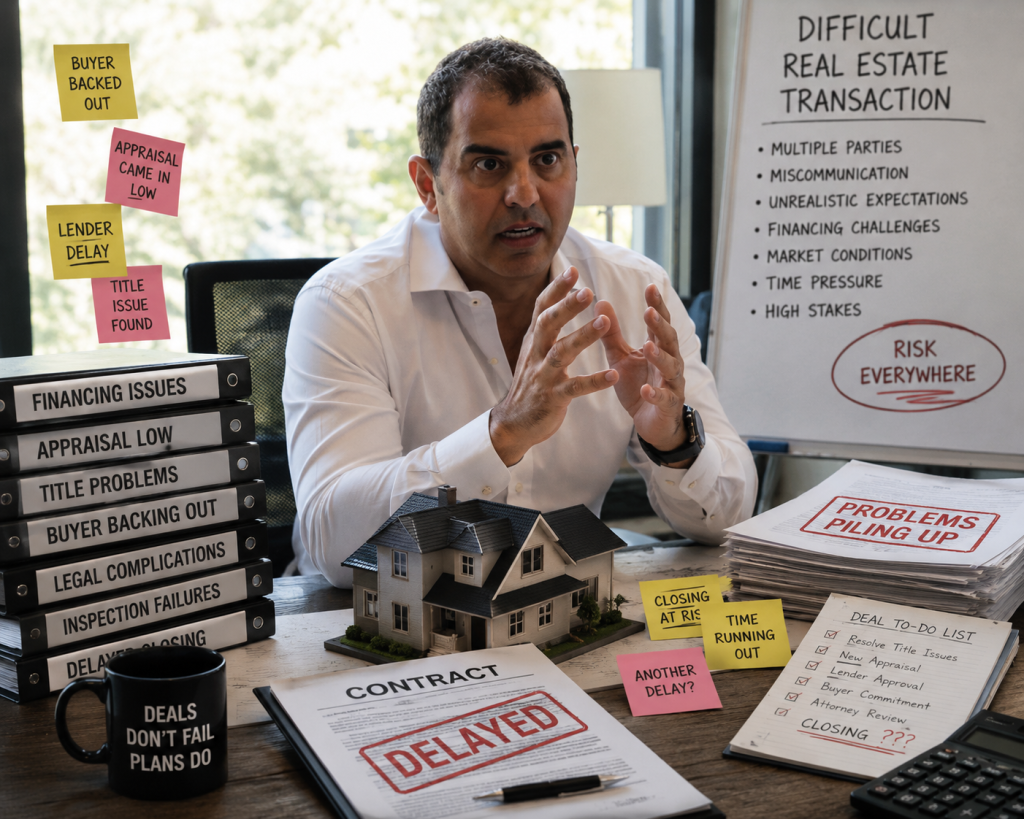
After more than three decades in real estate, one lesson stands out above all others: real estate transactions do not have to be difficult.
In my experience since 1991, transactions become challenging when communication breaks down, expectations are unclear, or trust is compromised.
Who Are the Key Players in a Real Estate Transaction?
Every real estate transaction typically involves the following parties:
- The Seller
- The Buyer
- The Buyer’s Lender
- The Buyer’s Agent
- The Seller’s Agent
- The Escrow Company
Each of these individuals or organizations plays an important role in ensuring a smooth and successful closing.
The Relationship Between Buyers and Sellers
One interesting aspect of a real estate transaction is that buyers and sellers rarely communicate directly with one another. Instead, communication is handled through their respective agents.
Sellers are often emotionally attached to their homes because of the memories and experiences tied to the property. Buyers, on the other hand, are emotionally invested in the transaction itself and eager to achieve their dream of homeownership.
This is why clear communication and professional guidance are so important.
The Buyer’s Lender Plays a Critical Role
The lender is another essential member of the transaction team.
A lender must communicate clearly with the buyer regarding financing requirements, timelines, and expectations. One of the most common causes of transaction stress is overpromising and underdelivering.
When buyers understand the lending process from the beginning, there are fewer surprises and a much smoother path to closing.
The Importance of Escrow
The escrow company serves as a neutral third party responsible for managing documents, funds, and deadlines throughout the transaction.
Escrow’s role is to keep all parties informed and ensure that important information is communicated promptly. Whether the news is good or bad, timely communication helps prevent confusion and keeps the transaction moving forward.
Lessons I’ve Learned From Difficult Real Estate Transactions
1. Never Overpromise and Underdeliver
2. Communication Is Everything
3. Set Expectations Early
4. Keep Emotions in Check
5. Focus on What You Can Control
Real estate transactions will always have moving parts, but they do not have to be stressful. Since 1991, we have been committed to helping buyers and sellers navigate the real estate process with perspective, professionalism, and thoughtful guidance every step of the way.